Bhaktivedanta Research Center
- Home
-

About
Collaborations
Documents/ Governance
Sustainable Development Goals
-
International Faculty Development Programme
CONFERENCE | November, 2020 |
AA five day international faculty development
programme organized in November 2020 with St. Xavier’s
College, Sri Jagannath Research Centre, St. Paul’s Cathedral
Mission College, Kolkata Society for Asian Studies and
Stockholm University
Platform – Zoom.
Live Streaming-YouTube,
If Philosophy is the mother of all subjects, as opined by
scholars, then Research can be considered as the basis of
enlightenment, leading humanity towards the path of
intellectual growth as well as materialistic development.
Kant famously stated: ‘Thoughts without content are empty;
intuitions without concepts are blind”. On the other hand,
Vico wanted to bring, through history, a blend of ‘the
values and abstractions of rationality, as well as the
mixture of skepticism and belief characteristic of the
Enlightenment’, while Collingwood harped on causality as the
key factor behind the social sciences, which can be
questioned from the perceptions of interpretations or the
hermeneutical viewpoint, focusing on the dichotomy of
objectivity and subjectivity.
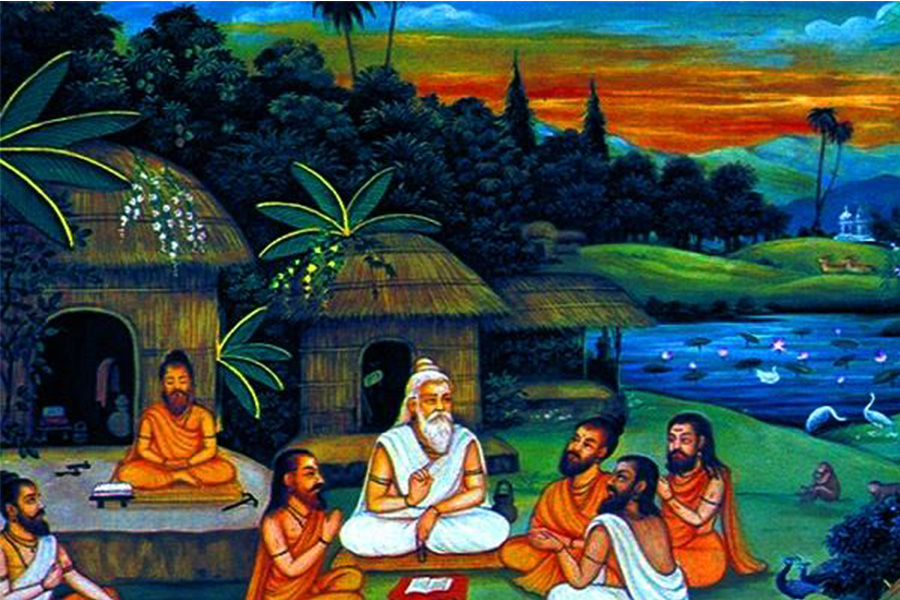
In contrast, the Indian system of learning is crucially
dependent on 1) epistemology, 2) ontology, and 3) axiology.
Amongst these three, epistemology has been regarded as the
pillar of Indian philosophy.
Against this backdrop, it can be said that a social science
researcher needs to know the nitty-gritty of anticipating
knowledge which will help him/her experience the essence of
research on the basis of epistemology and ontology.
Through this workshop, the participants were able to get an
idea of the recent trends of research in social sciences and
humanities focusing on the core of the qualitative methods
aimed at research designing, hypothesis formation, data
collection, survey methods, field study, content analysis,
etc. with a notion of criticality. This workshop also
highlighted the research issues related to Indic studies or
Indology.highlighted the research issues related to Indic
studies or Indology.
Objectives
- To have a better understanding of the qualitative methods in the said field.
- Developing basic skills of subjective analysis.
- To know the theories related to social science and humanities.
- To get an idea on the essence of Indic Studies with special emphasis on Indian philosophy, manuscriptology, heritage and culture studies.
Speakers
Confirmed Speakers
- Prof. Kaberi Chakraborty,
Associate Professor, Dept. of Political Science,
Calcutta University
- Dr. Santanu Dey,
Associate Professor, Dept. of History,
Ramakrishna Mission Vidyamandira, Belur Math, Belur
3) Dr. Sk Makbul Islam,
Associate Professor, Dept. of Bengali,
St. Paul’s Cathedral Mission College, Kolkata
4) Dr. Amit Dey,
Professor, Department of History,
University of Calcutta
5) Dr. Abhishek Bose,
Assistant Professor, Dept. of Comparative Indian Language and Literature,
University of Calcutta
6) Dr. Rajnish Mishra,
Associate Professor,
Dept. of Sanskrit and Indic Studies,
Jawaharlal Nehru University, New Delhi
7) Dr. Srijani Bhattacharjee,
Senior Research Fellow,
Maulana Abul Kalam Azad Institute of Asian Studies, Kolkata
8) Dr. Siddharth Satpathy,
Assistant Professor, Dept. of English, School of Humanities,
University of Hyderabad
9) Dr. Tinni Goswami,
Assistant Professor, Dept. of History,
St. Xavier’s College (Autonomous), Kolkata
10) Dr. Ranjana Ray,
Prof. Emeritus, Dept. of Anthropology,
University of Calcutta ( Right Side)
11) Dr. Rajarshi Chakraborty,
Assistant Professor,
Department of History,
Burdwan University
12) Prof. Sraboni Chatterjee,
Assistant Professor, Dept. of Psychology,
Bijoy Krishna Girl’s College
13) Dr. Amiya P. Sen,
Retired Professor of History,
Jamia Milia Islamia University, New Delhi,
Visiting Fellow, Oxford Centre for Hindu Studies, Oxford University
14) Dr. Ferdinando Sardella,
Assistant Professor, Dept. of Ethnology, History of Religions and Gender Studies,
Stockholm University
15) Dr. Kenneth Valpey,
Post- Doctoral Fellow,
Oxford Centre for Hindu Studies,
University of Oxford
16) Dr. Ulrika Martensson
Professor, Dept. of Philosophy and Religious Studies,
Norwegian University of Science and Technology, Norway
17) Dr. David Haberman,
Professor and Former Chair,
Dept. of Religious Studies,
Indiana University, USA
18) Dr. Abhishek Ghosh,
Assistant Professor,
Department of Hinduism and World Religions,
Grand Valley State University, USA
BRC Library